DAVID WYATT

ON WINTER MORNINGS
I know that the trees don’t panic in their nakedness,
I’ve learned that their thing is to stand up anyway
For months, and if they think of leaves and a deep shade,
They keep it to themselves. This is a good lesson for me,
But since I have so many others seeking my attention,
It slips down my arms like a cold rain down the blotchy bark
Of the sycamore and, because I don’t stay in one place
Very long—till the last—fails to sink in.
In such weather, the car’s heater
Blasting, I drive to work wearing three layers, wool
A fool’s shield, while the black locusts and silver maples
Reach out with nothing among their branches, and without
Crying; only the wind does that, too much a coward to
Show itself—and later, by June, the same, shadows
Like wide nets thrown everywhere, across the narrowest street.
| top |
*** ** ***
TWIN THOUGHTS
“Before you think twice, think again,” my lonely brother
would yell in his sleep under a full moon between fir trees
every night even if the moon was absent and the trees
were scruffy cottonwoods he refused to admire because
they sat by a stinking river and a narrow one at that.
I didn’t try to wake him, I had my own names for things
that were misplaced in the dark more than a few times
and when of a morning I found them again among colorless
snakes and horned lizards I often let them run wild and not
come home for days, the moon in half then and oddly brighter.
| top |
*** ** ***
CATHEDRAL
This cloudy morning I walk by the cathedral on my way to the bakery,
I watch a priest run up the stairs to the entrance, late for confession.
I never go inside and light a candle, which, years ago, I did occasionally
After a girlfriend, who was Catholic, encouraged me to.
The cathedral doors are heavy and the priest underestimates them,
Catching his foot and almost falling, but he recovers and disappears
Into his work as a savior’s surrogate. On time probably because
Most of the sinners aren’t, knowing about eternity. They could be
At the door of the bakery this week after Easter, April nudging
Flowers open again. I smell bread loaves and chocolate,
Daffodils in the display window a nice reminder of simple pleasures,
Scent of rain as the bakery’s bell sounds.
| top |
*** ** ***
COMPLICATIONS MADE MORE SENSE IN THE PAST
Do we push ourselves too much or are we simply
Taking on more responsibility since the dumbwaiter
Shut down? I miss the automat, as well, slice of pie
At three in the afternoon, several writers
Always there, each alone over a small table,
None looking up for fear one of the others
Might be ahead of the game, pushing a pencil
Through all he has made of having read Dostoevsky
The year before, in some duke’s palace.
What’s not Tuesday, then, remains next Thursday—
As things went, along the city’s brightest avenues.
Recently, my oncologist said the coast looks clear
To San Juan. I know the winds have died without me
Asking where pelicans found shelter.
| top |
*** ** ***
BELIEF
…they no longer spoke of profit and loss
-Lieh-tzu
I never did, in any acceptable sense. Some friends
of mine saw gain as a wild intangible,
while others were devoted to it; they displayed cars
and houses that demonstrated what profit could do for
well-being. I judge I was lazy —easily I made
that assumption, but had no drive to turn things around.
I took pleasure, despite hesitations, sitting on a porch stoop,
figuring whether a passing cloud would ever reach
the horizon, before becoming a different cloud,
or an element new to the eye, out of thin air,
as though loss weren’t possible.
| top |
*** ** ***
MOOD MUSIC
Since the street is empty I will sidestep the ant,
My legitimate brother, who has different goals
From mine, though both of us keep moving.
Night and day, and always away from, if possible,
The tenebrous stuff we can see ahead, the late-
Service Gothic church with its low light at the door
I understand is the result of infrequent offerings,
But the ant gives into the churchyard and loses
Himself among abandoned bulletins lying
In the uncut grass, the rough old markers there a few teeth
Short of articulating the silence that passes for faith.
| top |
*** ** ***
OLD MAN’S SEASON
He called it a torture of hollow weather,
Empty branches beneath a gray misgiving (or clouds),
The masked chickadee never in one spot:
Sycamore, granite lintel, for long –
Avoiding death.
The man sat on a bench and stared at slight traffic,
Mostly small trucks delivering to stores
Nearly out of business, and yet Christmas lights
Around the square, day and night, pulsed
Like temporary stars, one of which might magnify
And dominate the town.
| top |
DAVID WYATT
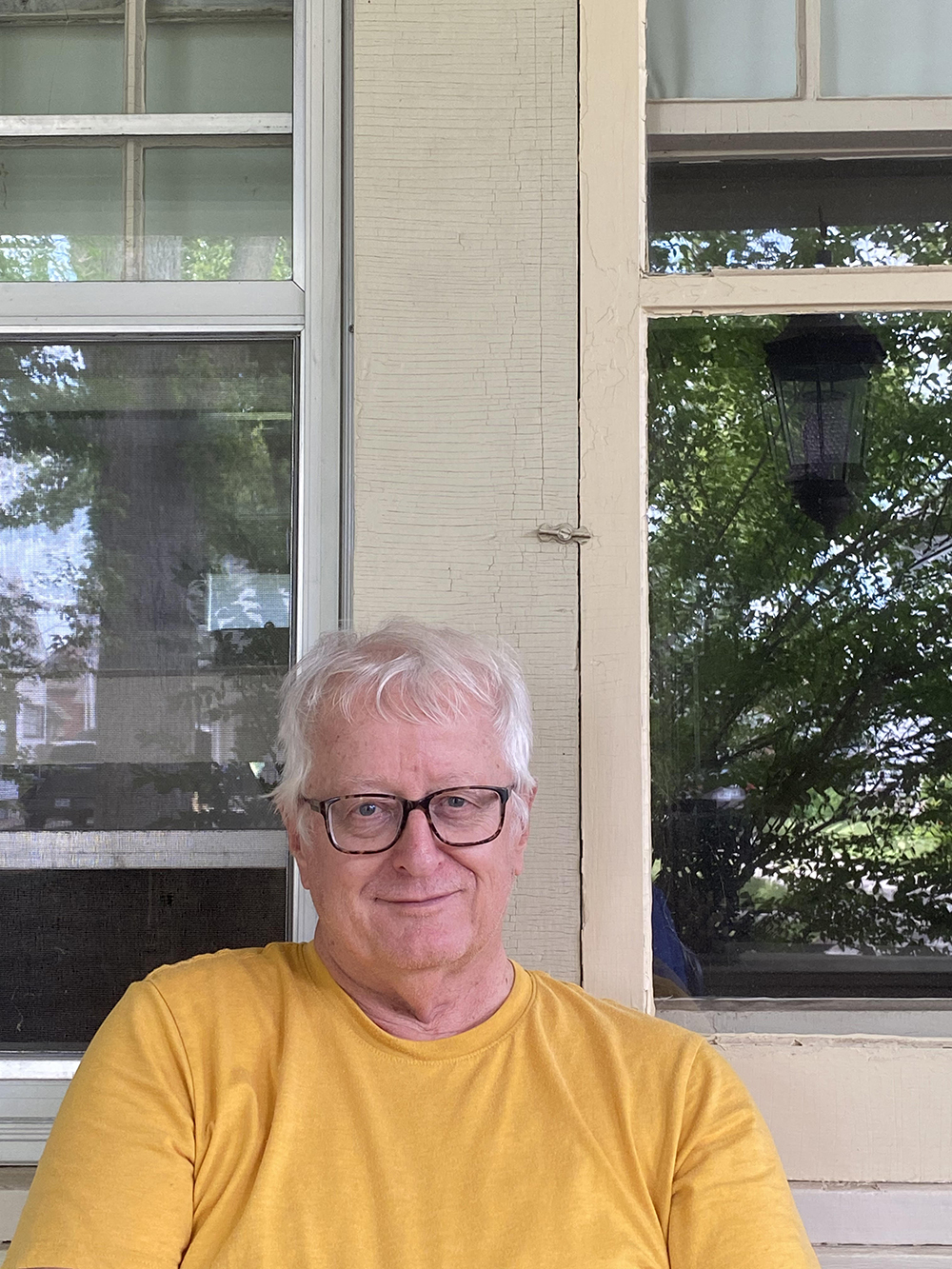 David Wyatt received his undergraduate degree in creative writing at U Nebraska, Omaha, and held a graduate teaching fellowship at University of Oregon. He was awarded a grant from the Nebraska Arts Council in 2006, and won the inaugural Loraine Williams Poetry Prize from The Georgia Review, in 2013. He has published poems, over fifty years, in Cutbank, Carolina Quarterly, Prairie Schooner, Alaska Quarterly Review, Northwest Review, Midwest Quarterly, Poetry, Poetry East, Mudfish, The Cafe Review, and other journals. He has published two books of poems, Gathering Place and Evening All of a Sudden, with WSC Press. Wyatt lives in Lincoln, NE, with his wife, Susan.
To download a printable PDF version of this page, click here.
| top |
 A Dozen Nothing